
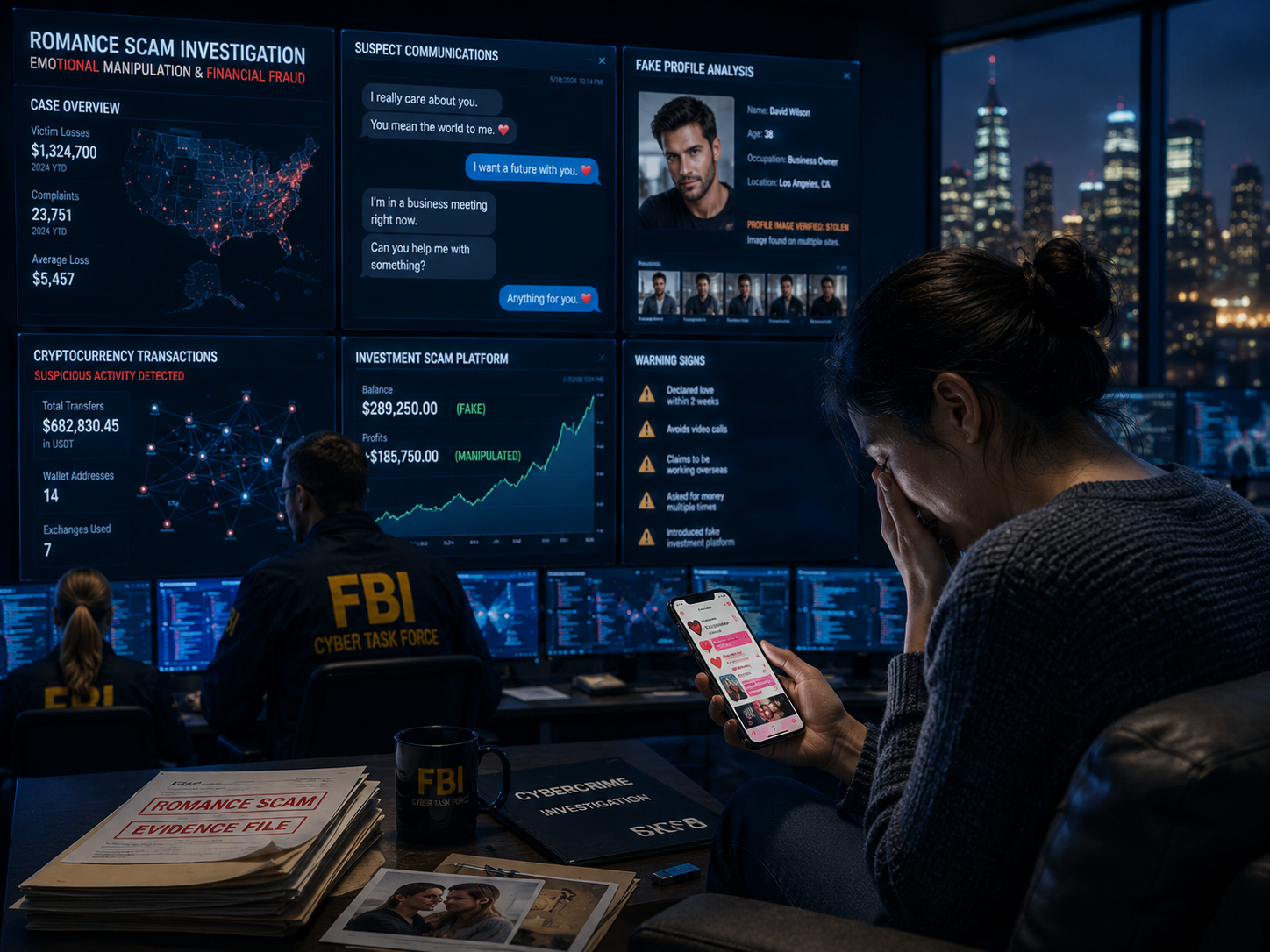
When Trust Becomes a Weapon
Romance scams are one of the most financially and emotionally damaging forms of fraud reported in the United States. According to the Federal Trade Commission (FTC) and the FBI’s Internet Crime Complaint Center (IC3), Americans lose hundreds of millions of dollars each year to criminals who exploit trust, companionship, and romantic relationships for financial gain.
These scams typically begin on dating websites, social media platforms, messaging applications, or through unsolicited text messages. Fraudsters spend weeks or months building emotional connections before requesting money or introducing fraudulent investment opportunities.
Unlike many other scams, romance fraud often leaves victims with both significant financial losses and lasting emotional trauma.
A Growing National Threat
The rise of online dating and social networking has created new opportunities for criminals to target victims across the country.
According to the Federal Trade Commission, consumers reported more than $1.14 billion in losses from romance scams between 2019 and 2023, making romance fraud one of the costliest forms of consumer fraud in the United States.
The FBI has also reported that romance scams frequently overlap with cryptocurrency investment fraud, commonly known as “pig butchering” schemes, resulting in even larger financial losses.
Romance scammers often create fake identities using:
- Stolen photographs
- Artificial intelligence-generated images
- Fabricated personal histories
- Fake military credentials
- False claims of overseas employment
- Fraudulent social media profiles
Many criminal organizations operate multiple fake identities simultaneously and target victims nationwide.
How Romance Scams Work
Step 1: Making Contact
Scammers commonly initiate contact through:
- Dating Apps (Tinder, Bumble, Hinge, Match, etc.)
- Telegram
- Text Messages
The conversation often begins casually and may appear completely harmless.
Some scammers claim they accidentally contacted the wrong person, while others initiate contact through dating platforms and quickly move conversations to private messaging apps.
Step 2: Building an Emotional Connection
Once communication begins, scammers focus on establishing trust and emotional attachment.
Common tactics include:
- Daily conversations
- Frequent compliments
- Expressions of love or affection
- Sharing fabricated personal stories
- Discussing future plans together
- Claiming exclusive commitment
Victims often communicate with scammers for weeks or months before any financial request is made.
The goal is to create a strong emotional bond that lowers skepticism and increases trust.
Step 3: Creating a Crisis
After trust has been established, the scammer introduces a financial problem or emergency.
Common stories include:
- Medical emergencies
- Travel expenses
- Military deployment issues
- Business setbacks
- Frozen bank accounts
- Family emergencies
- Customs or shipping fees
Victims are oftVictims are often told they are the only person who can help resolve the situation.en told they are the only person who can help resolve the situation.
Step 4: The Financial Request
The scammer eventually asks for money through methods that are difficult to reverse or recover.
Common payment methods include:
- Bank Transfers
- Wire Transfers
- Gift Cards
- Cryptocurrency
- Cash Transfer Services
- Payment Applications
Initially, requests may be relatively small.
As trust grows, requests often become larger and more frequent.
Some victims lose tens of thousands—or even hundreds of thousands—of dollars before realizing they have been targeted.
Romance Scams and Cryptocurrency Fraud
In recent years, federal investigators have observed a significant increase in romance scams that evolve into cryptocurrency investment fraud.
After establishing a relationship, scammers may introduce:
- Cryptocurrency investments
- Online trading platforms
- Wealth-building opportunities
- Exclusive investment groups
- Financial mentors
Victims are encouraged to invest through fraudulent platforms that display fake profits and fabricated account balances.
According to the FBI, cryptocurrency-related investment scams now account for billions of dollars in reported losses annually and frequently begin through online relationships.
This combination of emotional manipulation and financial fraud has become one of the fastest-growing scam models targeting Americans.
Why Victims Stay Engaged
Many victims later wonder why they did not recognize the warning signs sooner.
Romance scammers deliberately exploit:
- Loneliness
- Trust
- Hope
- Emotional vulnerability
- Desire for companionship
- Fear of losing the relationship
These criminals are skilled social engineers who understand how to manipulate emotions and build dependency over time.
Victims often become emotionally invested long before any financial requests occur.
Warning Signs of a Romance Scam
Red Flags You Should Never Ignore
| ⚠ The relationship develops unusually quickly. | ⚠ The individual refuses to meet in person. |
| ⚠ Video calls are repeatedly canceled or avoided. | ⚠ They claim to be working overseas, deployed in the military, or traveling internationally. |
| ⚠ They request money for emergencies or unexpected expenses. | ⚠ They ask for cryptocurrency payments. |
| ⚠ They encourage secrecy and discourage discussing the relationship with family or friends. | ⚠ Their social media presence appears limited, inconsistent, or recently created. |
| ⚠ They repeatedly promise repayment but continue requesting additional funds. | ⚠ Investment opportunities become part of the relationship. |
If multiple warning signs are present, the relationship may be fraudulent.
Who Is Targeted?
Romance scams affect people of all ages, professions, and backgrounds.
Victims include:
- Young Professionals
- Retirees
- Widows and Widowers
- Veterans and Military Families
- Healthcare Workers
- Business Owners
- College Students
- Divorced Individuals
Federal agencies emphasize that anyone can become a target regardless of age, education, or financial status.
The Human Cost
Financial losses are only part of the damage caused by romance scams.
Victims frequently experience:
- Emotional trauma
- Loss of trust
- Depression
- Anxiety
- Social isolation
- Financial hardship
- Damage to personal relationships
Many victims report feeling embarrassed or ashamed, which can delay reporting and make recovery more difficult.
The emotional impact often lasts long after the financial loss has occurred.
Protecting Yourself Online
Before developing a relationship with someone you have only met online:
| ✓ Verify their identity independently. | ✓ Conduct reverse image searches on profile photos. |
| ✓ Be cautious of rapid emotional attachment. | ✓ Never send money to someone you have not met in person. |
| ✓ Be skeptical of investment opportunities introduced through romantic relationships. | ✓ Consult trusted family members or friends before making financial decisions. |
| ✓ Research suspicious claims independently. | ✓ Report suspicious behavior immediately. |
Public Awareness Advisory
Federal agencies, including the FBI and FTC, continue to warn the public about the growing threat of romance scams and romance-related cryptocurrency fraud.
Many of these schemes are operated by organized criminal networks located overseas and are specifically designed to exploit emotional relationships for financial gain.
Public awareness, education, and early reporting remain among the most effective tools for preventing future victimization.
Report Suspicious Activity
If you believe you have encountered a romance scam, preserve all relevant information, including:
- Chat Messages
- Emails
- Social Media Profiles
- Phone Numbers
- Cryptocurrency Wallet Addresses
- Transaction Records
- Photographs Shared by the Suspect
- Dating Profile Information
Reporting suspicious activity helps investigators identify emerging fraud trends, disrupt criminal networks, and protect future victims from financial and emotional harm.