
Staying Informed About Emerging Online Scam Threats
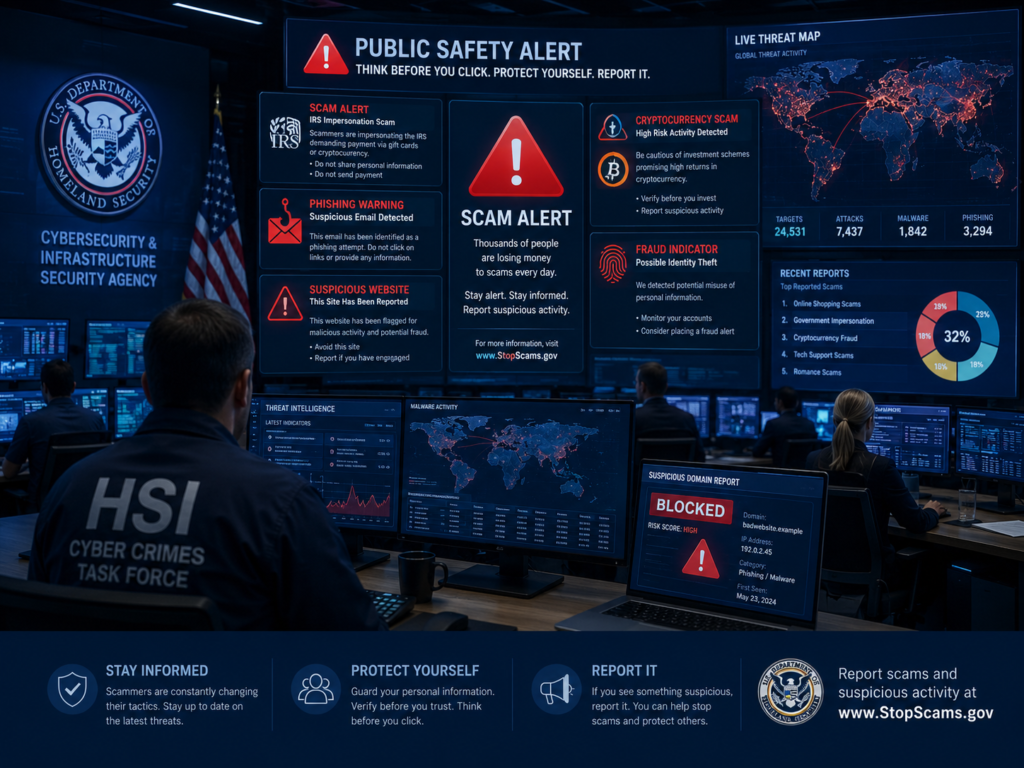
Public safety alerts are an important part of protecting individuals, families, businesses, and communities from online fraud. As scam networks continue to evolve, criminals are using increasingly sophisticated methods to target victims through social media, messaging applications, fraudulent websites, cryptocurrency platforms, emails, phone calls, and text messages.
Many scams spread quickly because victims are contacted directly and pressured to act before they have time to verify the situation. Public safety alerts help raise awareness about current fraud trends, common warning signs, and steps the public can take to reduce risk.
Why Public Safety Alerts Matter
Online scams can cause serious financial, emotional, and personal harm. A single fraudulent message, fake investment offer, or impersonation scheme may lead to stolen funds, identity theft, account compromise, or repeated targeting by criminal networks.
Public safety alerts help the public:
• Recognize emerging scam tactics
• Identify suspicious messages and websites
• Avoid fraudulent investment platforms
• Protect personal and financial information
• Preserve evidence if suspicious activity occurs
• Report fraud through appropriate channels
• Warn family members, coworkers, and communities
Staying informed can help prevent scams before losses occur.
Common Types of Scam Alerts
Scam alerts may involve many different forms of online fraud. Some of the most common include:
Cryptocurrency Investment Alerts
Fraudsters create fake trading platforms, investment dashboards, or cryptocurrency exchanges that display false profits. Victims may be encouraged to deposit more money before being blocked from withdrawing funds.
Romance Scam Alerts
Criminals build emotional relationships online before requesting money or introducing fake investment opportunities. These scams may develop over weeks or months.
Phishing Alerts
Scammers send fake emails, text messages, or website links designed to steal passwords, verification codes, banking details, or cryptocurrency wallet information.
Fake Customer Support Alerts
Fraudsters impersonate banks, cryptocurrency exchanges, technology companies, delivery services, or government agencies to steal account access or personal information.
Recovery Scam Alerts
Victims who already lost money may be contacted by criminals claiming they can recover stolen funds for an upfront fee. These offers are often another scam.
Messaging App Scam Alerts
WhatsApp, Telegram, and other messaging platforms are frequently used to promote fake investment groups, fraudulent trading advice, and false profit screenshots.
Warning Signs That Require Immediate Caution
Public safety alerts often highlight warning signs that appear across many different scam types.
Be cautious if you encounter:
⚠ Guaranteed profits or risk-free investments
⚠ Pressure to act immediately
⚠ Requests for cryptocurrency payments
⚠ Demands for fees, taxes, or deposits before withdrawals
⚠ Messages from unknown individuals offering financial opportunities
⚠ Requests to move conversations to WhatsApp, Telegram, or other private apps
⚠ Fake customer support representatives asking for passwords or codes
⚠ Suspicious links or misspelled website addresses
⚠ Claims that your account will be locked unless you respond immediately
⚠ Offers to recover stolen funds for an upfront payment
If multiple warning signs appear, stop communication and verify the situation independently.
How Scammers Use Urgency
A common feature of online scams is urgency. Scammers may claim that an opportunity will disappear, an account will be suspended, a loved one is in danger, or a financial penalty will occur if action is not taken immediately.
These pressure tactics are designed to prevent careful thinking.
Common urgency phrases include:
• “Act now”
• “Final warning”
• “Limited-time opportunity”
• “Your account will be frozen”
• “Immediate payment required”
• “Do not tell anyone”
• “You must complete this today”
Legitimate organizations usually allow time for verification and do not demand secrecy or immediate payment through unusual methods.
Protecting Yourself After Seeing a Scam Alert
If you receive a public safety alert or believe you have encountered suspicious activity, take the following steps:
- Do not click suspicious links.
- Do not send money or cryptocurrency.
- Do not share passwords, verification codes, or private keys.
- Verify the information through official sources.
- Save screenshots, messages, emails, phone numbers, and website links.
- Contact your bank or financial institution if money was sent.
- Warn trusted family members or coworkers if the scam may affect them.
- Report suspicious activity through official reporting channels.
Quick action can help reduce further risk and protect others from similar schemes.
Protecting Older Adults and Vulnerable Individuals
Scammers often target individuals who may be isolated, unfamiliar with online platforms, or under emotional pressure. Older adults, recent scam victims, new investors, and individuals seeking companionship or financial help may be especially vulnerable.
Families and caregivers can help by:
✓ Discussing common scam warning signs
✓ Encouraging verification before sending money
✓ Reviewing suspicious messages together
✓ Helping secure online accounts
✓ Encouraging early reporting
✓ Avoiding blame or embarrassment
Many victims delay reporting because they feel ashamed. Support and understanding can make it easier for victims to come forward.
Business and Community Awareness
Businesses, community organizations, schools, and local groups can also play an important role in fraud prevention. Scam alerts should be shared with employees, members, and community networks when relevant.
Organizations can reduce risk by:
✓ Training staff to recognize phishing emails
✓ Verifying payment requests before approval
✓ Using multi-factor authentication
✓ Monitoring suspicious account activity
✓ Reporting impersonation attempts
✓ Sharing public safety alerts internally
A single informed employee or community member may prevent a larger fraud incident.
Preserving Evidence
If suspicious activity occurs, preserving evidence is important. Even small details may help identify fraud patterns or link related scams.
Useful evidence may include:
• Website URLs
• Email addresses
• Phone numbers
• Social media profiles
• Chat messages
• Screenshots
• Transaction receipts
• Cryptocurrency wallet addresses
• Bank transfer records
• Names used by the suspected scammer
Do not delete messages, block accounts, or erase records before saving important information.
Public Safety Advisory
The Scam Center Strike Force encourages the public to remain alert to emerging online scam threats. Fraudsters constantly adjust their tactics, but many schemes rely on the same patterns: trust-building, urgency, secrecy, false authority, and financial pressure.
Before sending money, clicking links, sharing personal information, or trusting an online contact, take time to verify the situation independently.
Awareness is one of the most effective tools for preventing online fraud.
Report Suspicious Activity
If you believe you have encountered an online scam, fraudulent investment platform, phishing attempt, impersonation scheme, or suspicious cryptocurrency activity, preserve all available evidence and report the activity through appropriate channels.
Reporting suspicious activity helps identify scam networks, warn the public, disrupt fraudulent infrastructure, and protect future victims.