

Following the Digital Trail Behind Modern Fraud
Digital forensics has become one of the most important tools used by law enforcement agencies in the fight against cybercrime, cryptocurrency fraud, identity theft, and transnational scam networks. As criminal organizations increasingly rely on digital platforms to target victims, investigators rely on digital evidence to reconstruct events, identify suspects, trace financial transactions, and support criminal prosecutions.
According to the Federal Bureau of Investigation (FBI), digital forensic specialists serve as subject matter experts who collect, preserve, examine, and analyze electronic evidence in support of investigations. Modern digital forensic investigations may involve computers, smartphones, cryptocurrency wallets, cloud services, messaging applications, and other connected devices.
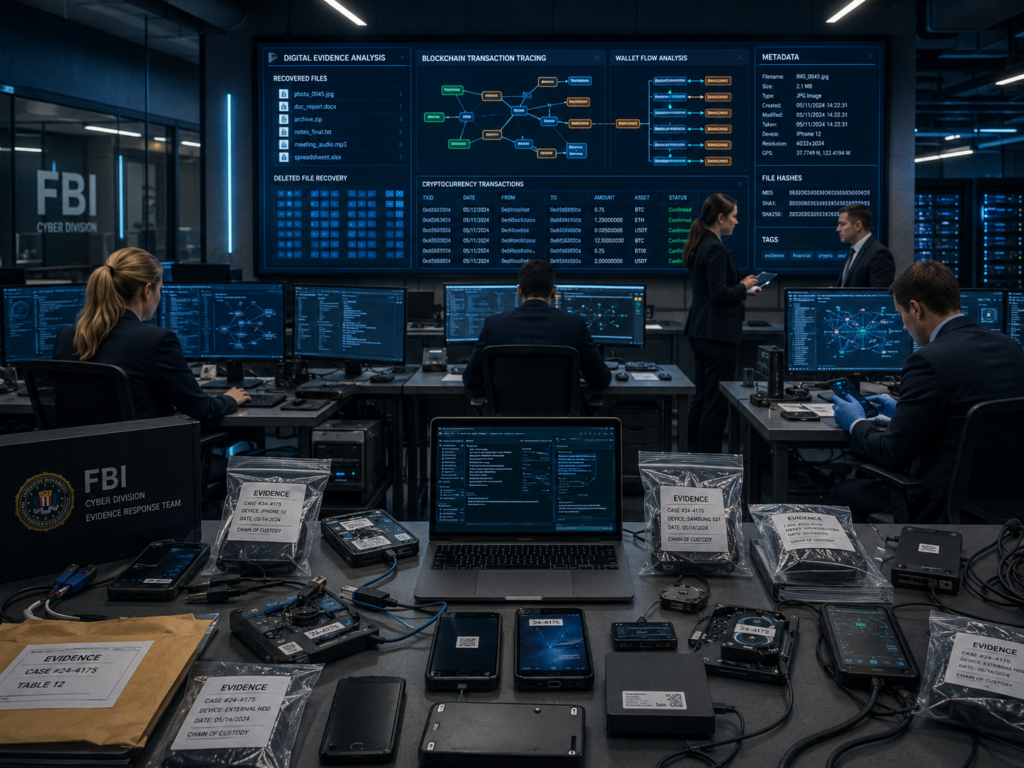
What Is Digital Forensics?
Digital forensics is the process of identifying, preserving, analyzing, and presenting electronic evidence in a manner that can be used during criminal investigations and legal proceedings.
The National Institute of Justice defines digital evidence as information stored or transmitted in digital form that may be relied upon in court. Such evidence can be found on computers, mobile phones, cloud storage platforms, GPS devices, messaging applications, and countless other digital systems.
Digital evidence is no longer limited to cybercrime investigations. Today, digital evidence plays a critical role in nearly every major criminal investigation.
Types of Digital Evidence
Modern investigators may examine:
• Mobile phones
• Laptop and desktop computers
• Cryptocurrency wallets
• Email communications
• Cloud storage accounts
• Social media activity
• Messaging applications
• Internet browsing history
• GPS and location data
• Surveillance video
• Digital photographs
• Financial transaction records
According to the FBI’s Regional Computer Forensics Laboratories, virtually any device capable of storing electronic data may contain evidence relevant to an investigation.
The Digital Forensic Process
Federal investigative agencies generally follow a structured process to ensure evidence remains reliable and legally admissible.
Evidence Identification
Investigators first determine which devices, accounts, or systems may contain relevant evidence.
Evidence Preservation
Electronic evidence must be secured to prevent alteration or destruction.
The FBI and other forensic organizations emphasize maintaining a documented chain of custody throughout the investigative process.
Evidence Collection
Specialized forensic tools are used to create exact copies of digital data while preserving the integrity of the original evidence.
Evidence Analysis
Investigators examine recovered data, deleted files, communications, transaction histories, and system activity.
Reporting
Findings are documented in formal reports that may be used during criminal prosecutions, civil litigation, or intelligence operations.
Digital Forensics and Cryptocurrency Investigations
Cryptocurrency fraud investigations increasingly depend on digital forensic techniques.
Investigators may analyze:
• Blockchain transactions
• Wallet activity
• Exchange records
• Device data
• IP address information
• Communication records
Federal investigators use these methods to trace the movement of funds through cryptocurrency networks and identify connections between victims, suspects, and criminal organizations.
FBI Digital Forensic Capabilities
The FBI operates Regional Computer Forensics Laboratories (RCFLs) throughout the United States.
According to the FBI, these laboratories specialize in extracting and analyzing digital evidence from:
• Mobile devices
• Computers
• Storage media
• Damaged devices
• Encrypted systems
• Multimedia evidence
FBI examiners are capable of locating deleted, encrypted, or damaged files that may serve as evidence in criminal and national security investigations.
Digital Evidence in Scam Investigations
Digital forensics plays a central role in investigations involving:
• Cryptocurrency Investment Scams
• Romance Scams
• Recovery Scams
• Phishing Attacks
• Wallet Theft
• Fake Customer Support Schemes
• Identity Theft
• Money Laundering Operations
Investigators frequently reconstruct communication timelines, analyze payment flows, identify fraudulent infrastructure, and connect seemingly unrelated incidents to larger criminal networks.
Emerging Challenges
As technology evolves, investigators face increasingly sophisticated threats.
These include:
• Encrypted communications
• Anonymous cryptocurrency services
• Cloud-based infrastructure
• Artificial Intelligence generated content
• Deepfake media
• Cross-border digital crime
Federal officials continue to emphasize the importance of maintaining access to digital evidence as a critical component of public safety and criminal investigations.
Supporting Victim Protection
Digital forensic investigations not only support criminal prosecutions but also assist in:
• Identifying victims
• Recovering evidence
• Tracing stolen assets
• Disrupting fraud networks
• Preserving investigative intelligence
The rapid reporting of cyber-enabled fraud can significantly improve the chances of identifying evidence before it is lost or destroyed. The FBI encourages victims of cyber-enabled crime and online fraud to report incidents as soon as possible.
Public Safety Advisory
If you believe you have been targeted by an online scam, preserve all available digital evidence.
Important evidence may include:
• Screenshots
• Emails
• Chat logs
• Wallet addresses
• Transaction records
• Website URLs
• Mobile device data
• Social media profiles
Digital evidence often provides investigators with the information needed to identify criminal actors, trace financial activity, and disrupt ongoing fraud schemes.
Report Suspicious Activity
Timely reporting helps investigators identify emerging threats, preserve digital evidence, and protect future victims.
Every screenshot, wallet address, message, and transaction record may provide valuable investigative leads in the fight against online fraud.