

Recognizing the Red Flags of Online Scams
Fraudsters use a wide range of tactics to deceive victims, but many scams share common warning signs. Whether the scam involves cryptocurrency investments, romance fraud, phishing attacks, fake customer support, or impersonation schemes, recognizing these red flags can help prevent financial loss and identity theft.
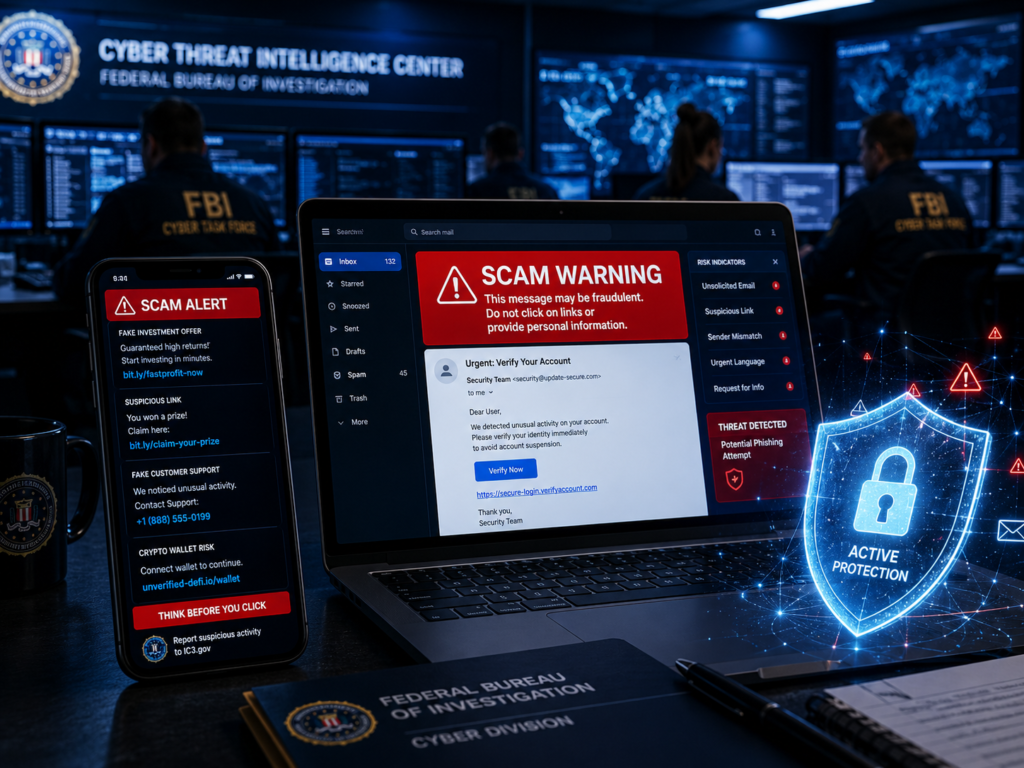
Understanding the warning signs of fraud is one of the most effective ways to protect yourself, your family, and your community from online crime.
Why Warning Signs Matter
Many victims do not realize they are being targeted until after money has been sent or personal information has been compromised. Scammers often appear trustworthy, professional, and convincing.
By recognizing suspicious behavior early, you can:
• Avoid financial losses
• Protect personal information
• Prevent account compromise
• Reduce the risk of identity theft
• Protect cryptocurrency assets
• Help others avoid similar scams
Awareness is often the first line of defense against fraud.
Warning Sign #1: Guaranteed Profits or Risk-Free Investments
One of the most common fraud indicators is a promise of guaranteed returns with little or no risk.
Be cautious if someone claims:
• Guaranteed profits
• Exclusive investment opportunities
• Insider trading information
• Daily or weekly returns with no risk
• Fast and easy wealth
Legitimate investments always involve risk. No one can guarantee future profits.
Warning Sign #2: Pressure to Act Immediately
Scammers often create urgency to prevent victims from thinking critically.
Common phrases include:
⚠ “Act now.”
⚠ “Limited-time opportunity.”
⚠ “Your account will be suspended.”
⚠ “Immediate payment required.”
⚠ “Don’t tell anyone.”
Legitimate organizations rarely require immediate action without allowing time for verification.
Warning Sign #3: Requests for Cryptocurrency Payments
Cryptocurrency is frequently used by scammers because transactions can be difficult to reverse.
Be suspicious if someone requests payment through:
• Bitcoin
• Ethereum
• USDT
• Gift cards
• Wire transfers
• Other irreversible payment methods
Fraudsters often prefer payment methods that offer limited consumer protection.
Warning Sign #4: Communication Moves to Private Messaging Apps
Scammers commonly ask victims to continue conversations on:
• Telegram
• Signal
• Private social media messaging
This tactic helps avoid detection and allows criminals to control the conversation.
Warning Sign #5: Requests for Personal Information
Fraudsters may ask for information that should remain private.
Never share:
• Passwords
• Verification codes
• Banking credentials
• Credit card information
• Social Security numbers
• Cryptocurrency seed phrases
• Private keys
Legitimate organizations will not ask for sensitive credentials through email, text messages, or social media.
Warning Sign #6: Difficulty Withdrawing Funds
Many fraudulent investment platforms allow deposits but block withdrawals.
Potential warning signs include:
⚠ Unexpected withdrawal fees
⚠ Additional tax payments
⚠ Account verification charges
⚠ Requests for larger deposits
⚠ Customer support delays
⚠ Frozen account claims
If a platform repeatedly delays or prevents withdrawals, it may be fraudulent.
Warning Sign #7: Unverified Customer Support
Scammers frequently impersonate:
• Banks
• Cryptocurrency exchanges
• Government agencies
• Technology companies
• Delivery services
• Financial institutions
Always verify support contacts through official websites before providing information.
Warning Sign #8: Emotional Manipulation
Many scams rely on emotional pressure.
Fraudsters may:
• Pretend to be a romantic partner
• Claim a family emergency
• Promise friendship or companionship
• Offer financial rescue
• Use sympathy or fear
Emotional manipulation is a common tactic designed to lower a victim’s defenses.
Warning Sign #9: Suspicious Websites and Links
Before clicking any link, check for:
⚠ Misspelled website names
⚠ Unusual domain extensions
⚠ Poor website design
⚠ Missing contact information
⚠ Fake security certificates
⚠ Unexpected login requests
Always visit official websites directly instead of clicking links received through messages.
Warning Sign #10: Recovery Offers After a Scam
Victims who have already lost money are frequently targeted again.
Recovery scammers may claim they are:
• Lawyers
• Government agents
• Investigators
• Asset recovery specialists
• Cryptocurrency tracing experts
They often demand upfront fees and disappear after payment.
Common Scam Behaviors
Be cautious if someone:
✓ Refuses video calls
✓ Avoids meeting in person
✓ Uses stolen profile photos
✓ Changes stories frequently
✓ Requests secrecy
✓ Promises unrealistic returns
✓ Pressures you to send money
✓ Claims to have special access or insider information
Multiple warning signs often indicate a higher risk of fraud.
What To Do If You Notice Warning Signs
If you suspect fraud:
- Stop communication immediately.
- Do not send additional money.
- Do not click suspicious links.
- Preserve screenshots and messages.
- Save transaction records.
- Change passwords if necessary.
- Contact your financial institution if funds were sent.
- Report suspicious activity through official channels.
Acting quickly may help prevent further losses.
Public Safety Advisory
Fraudsters constantly adapt their tactics, but many scams follow similar patterns involving trust-building, urgency, secrecy, financial pressure, and false promises.
If something seems too good to be true, requires immediate action, or involves requests for sensitive information, take time to verify the situation independently before responding.
Recognizing warning signs early can significantly reduce the risk of becoming a victim of online fraud.
Report Suspicious Activity
If you encounter suspicious messages, websites, investment offers, or requests for personal information, preserve all available evidence and report the activity through appropriate channels.
Reporting suspicious activity helps identify fraud patterns, disrupt scam networks, and protect future victims.